
No products in the cart.

Adenium, commonly known as the Desert Rose, is a stunning succulent that captivates plant lovers with its unique caudex (swollen trunk), glossy leaves, and vibrant flowers. Native to arid regions of Africa and the Arabian Peninsula, this plant is a favorite among gardeners and collectors for its exotic beauty and relatively low maintenance. Whether you’re a beginner or an experienced plant enthusiast, this comprehensive guide will walk you through everything you need to know about Adenium care, ensuring your Desert Rose thrives in your home or garden.
What is Adenium?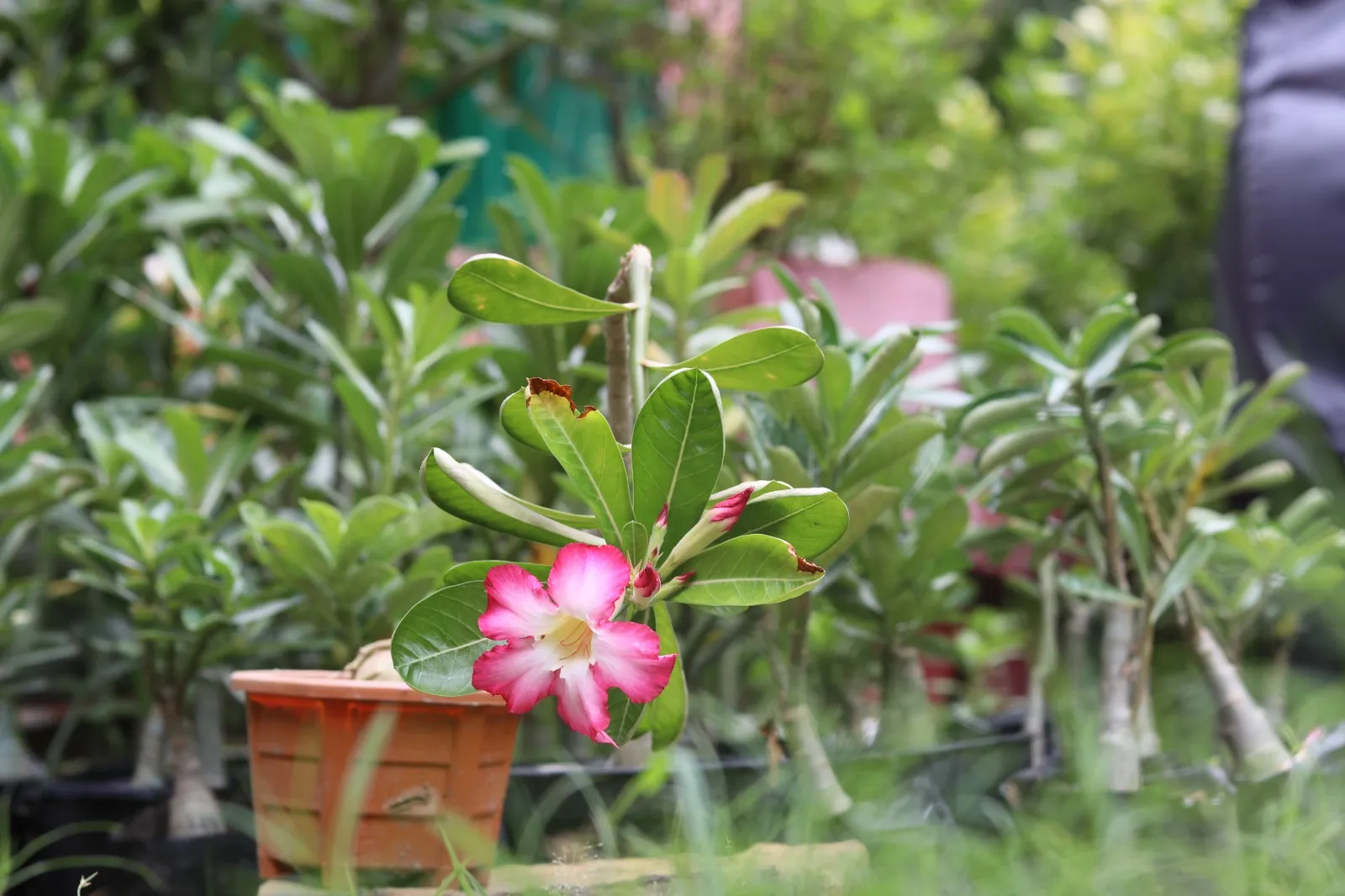
Adenium is a genus of flowering plants belonging to the Apocynaceae family. The most popular species, Adenium obesum, is known for its striking flowers and thick, bulbous trunk that stores water, making it highly drought-tolerant. Adenium is often grown as a bonsai due to its unique shape and adaptability to pruning.
How to Care for Adenium: Adenium Care A Step-by-Step Guide A
2. Watering
Adenium is a drought-tolerant plant, and overwatering is its biggest enemy. Water sparingly, allowing the soil to dry out completely between waterings. During the growing season (spring and summer), water once a week. In winter, reduce watering to once every 2-3 weeks, as the plant goes dormant.
Signs of Overwatering: Yellowing leaves, soft caudex, and root rot.
Signs of Underwatering: Wrinkled caudex and drooping leaves.
3. Soil Requirements
Adenium requires well-draining soil to prevent root rot. Avoid using heavy, clay-based soils or materials like perlite and pumice. Instead, opt for a mix of:
Sand: Improves drainage and prevents waterlogging.
Cocopeat: Retains some moisture while allowing excess water to drain.
Vermicompost: Adds nutrients to the soil without making it too dense.
A good ratio is 50% sand, 30% cocopeat, and 20% vermicompost.
4. Temperature and Humidity
Adenium loves warm, dry climates and thrives in temperatures between 65°F and 90°F (18°C to 32°C). It is not frost-tolerant and should be brought indoors if temperatures drop below 50°F (10°C).
Humidity: Adenium prefers low to moderate humidity. High humidity can lead to fungal issues, so ensure proper air circulation around the plant.
5. Fertilizing
Feed your Adenium with a balanced, water-soluble fertilizer (e.g., 10-10-10 NPK) during the growing season. Apply fertilizer every 4-6 weeks to promote healthy growth and blooming. Avoid fertilizing during winter dormancy.
Pro Tip: Use a fertilizer with higher phosphorus content to encourage more blooms.
6. Pruning and Shaping
Pruning is essential to maintain Adenium’s shape and encourage branching. The best time to prune is in early spring, just before the growing season begins. Use clean, sharp tools to remove dead or overgrown branches.
Bonus: You can use the cuttings to propagate new plants!
7. Repotting
Adenium grows slowly and doesn’t need frequent repotting. Repot every 2-3 years or when the plant outgrows its container. Choose a pot with drainage holes and use fresh, well-draining soil.
Pro Tip: Repotting is also a good time to inspect the roots for rot or pests.
8. Pests and Diseases
Adenium is generally pest-resistant but can occasionally attract spider mites, mealybugs, or aphids. Treat infestations with insecticidal soap or neem oil.
Common Issues:
Root Rot: Caused by overwatering or poor drainage.
Leaf Drop: Often occurs during dormancy or due to sudden temperature changes.
Propagating Adenium
Adenium can be propagated from seeds or cuttings:
Seeds: Sow seeds in well-draining soil and keep them warm and moist until germination.
Cuttings: Take a 6-inch cutting, let it dry for a day, and plant it in well-draining soil.
Pro Tip: Propagation from cuttings is faster and ensures the new plant retains the characteristics of the parent plant.
How often should I water my Adenium?
Water once a week during the growing season and reduce to once every 2-3 weeks in winter. Always let the soil dry out completely between waterings.
Why is my Adenium not blooming?
Lack of sunlight, overwatering, or insufficient nutrients can prevent blooming. Ensure your plant gets enough light and fertilizer.
How do I prevent root rot?
Use well-draining soil, avoid overwatering, and ensure the pot has drainage holes. Use good quality fungicide.
Can I grow Adenium from seeds?
Yes, but seeds take longer to mature compared to cuttings.
What is the best fertilizer for Adenium?
Use a balanced fertilizer (10-10-10 NPK) or one with higher phosphorus content to encourage blooming.
What is the best time for Adenium pruning?
The best time to prune Adenium is in early spring, just before the growing season begins.
Pro Tips for Adenium Care
Rotate your Adenium occasionally to ensure even growth and prevent leaning.
Use a pot with drainage holes to avoid waterlogging.
Avoid over-fertilizing, as it can harm the plant.
Keep an eye out for pests and treat them promptly to prevent infestations.
If growing indoors, ensure adequate airflow to prevent fungal issues.
